Male Spix’s Macaw for Sale
$3,000.00
Male Spix’s Macaw for Sale – 1 Year 8 Months Old
Meet our beautiful male Spix’s Macaw, aged 1 year and 8 months, admired for his stunning blue plumage, charming personality, and remarkable intelligence. He is very friendly, well-tamed, and comfortable around people, making him a wonderful companion for experienced parrot enthusiasts. This exceptional macaw is known for his curious nature, playful behavior, and ability to build strong bonds with his caregivers. A magnificent and highly sought-after parrot, the Spix’s Macaw requires specialized care, a suitable environment, and responsible ownership. Prospective buyers should also ensure compliance with all applicable endangered-species protection and legal trade requirements.
Description
Spix’s Macaw for Sale – Little Blue Macaw Information, Facts, Lifespan & Conservation
The Spix’s Macaw (Cyanopsitta spixii), also widely known as the Little Blue Macaw, is one of the rarest and most recognized macaw species in the world. Native to Brazil, this small blue parrot has become an important symbol of international parrot conservation because of its extremely limited population and long history of conservation breeding.
Spix’s Macaws are known for their striking blue plumage, relatively small size compared with many other macaws, and remarkable conservation history. The species was historically associated with the Caatinga region of northeastern Brazil, particularly areas around the São Francisco River.
Because Spix’s Macaw is subject to strict conservation and international wildlife-trade regulations, anyone researching a Spix’s Macaw for sale should carefully verify the bird’s legal status, documentation, origin, identification, and applicable import, export, ownership, and transfer requirements before considering any transaction.
What Is a Spix’s Macaw?
The Spix’s Macaw (Cyanopsitta spixii) is a blue macaw belonging to the parrot family, Psittacidae. It is the only known species in the genus Cyanopsitta, making it a monotypic genus.
The bird is commonly called the Little Blue Macaw because of its predominantly blue coloration and smaller body size compared with larger macaws such as the Hyacinth Macaw.
Spix’s Macaw is particularly important to conservation programs because the species experienced a dramatic population decline caused by habitat loss and historical capture for the wildlife trade.
Today, conservation organizations, breeding institutions, and governmental programs have worked to maintain genetically managed populations and support conservation efforts associated with the species.
Spix’s Macaw Scientific Classification
Here is the accepted taxonomic classification of the Spix’s Macaw:
- Class: Aves
- Order: Psittaciformes
- Family: Psittacidae
- Genus: Cyanopsitta
- Species: Cyanopsitta spixii
- Common name: Spix’s Macaw
- Other common name: Little Blue Macaw
- Subspecies: No recognized subspecies
The species was originally described by Johann Georg Wagler in 1832. Its scientific name is associated with the German naturalist Johann Baptist von Spix, who collected the type specimen during his expedition in Brazil.
What Does Cyanopsitta Mean?
The genus name Cyanopsitta refers to the bird’s blue coloration and its classification as a parrot. The species name spixii honors Johann Baptist von Spix.
Where Does the Spix’s Macaw Come From?
The Spix’s Macaw is native to Brazil, where it historically inhabited the dry woodland and river-associated habitats of the northeastern part of the country.
Its natural habitat was closely associated with the Caatinga biome. The species depended on particular trees and nesting resources found along seasonal waterways and dry forest environments.
Habitat destruction and changes to the natural landscape contributed significantly to the species’ decline.
For anyone researching Spix’s Macaw for sale, understanding its Brazilian origin is important because international movement of this species is highly regulated and conservation documentation is essential.
Why Is the Spix’s Macaw So Rare?
The Spix’s Macaw became critically endangered as its natural habitat was reduced and birds were historically captured for the illegal wildlife trade.
The species became famous worldwide because of the extraordinary decline in its wild population. Conservation breeding subsequently became an important part of efforts to prevent the species from disappearing completely.
The history of the Spix’s Macaw demonstrates why responsible captive breeding, habitat protection, genetic management, and legally compliant wildlife trade are important for endangered species.
Spix’s Macaw and Other Blue Macaws
Spix’s Macaw belongs to a group of South American blue macaws that includes several exceptionally rare species.
These include:
- Spix’s Macaw (Cyanopsitta spixii)
- Hyacinth Macaw (Anodorhynchus hyacinthinus)
- Lear’s Macaw (Anodorhynchus leari)
- Glaucous Macaw (Anodorhynchus glaucus)
These species are notable for their blue plumage and their conservation importance. Their population histories differ considerably, however, so they should not all be described as having the same conservation status.
Spix’s Macaw Appearance
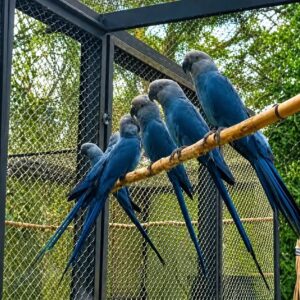
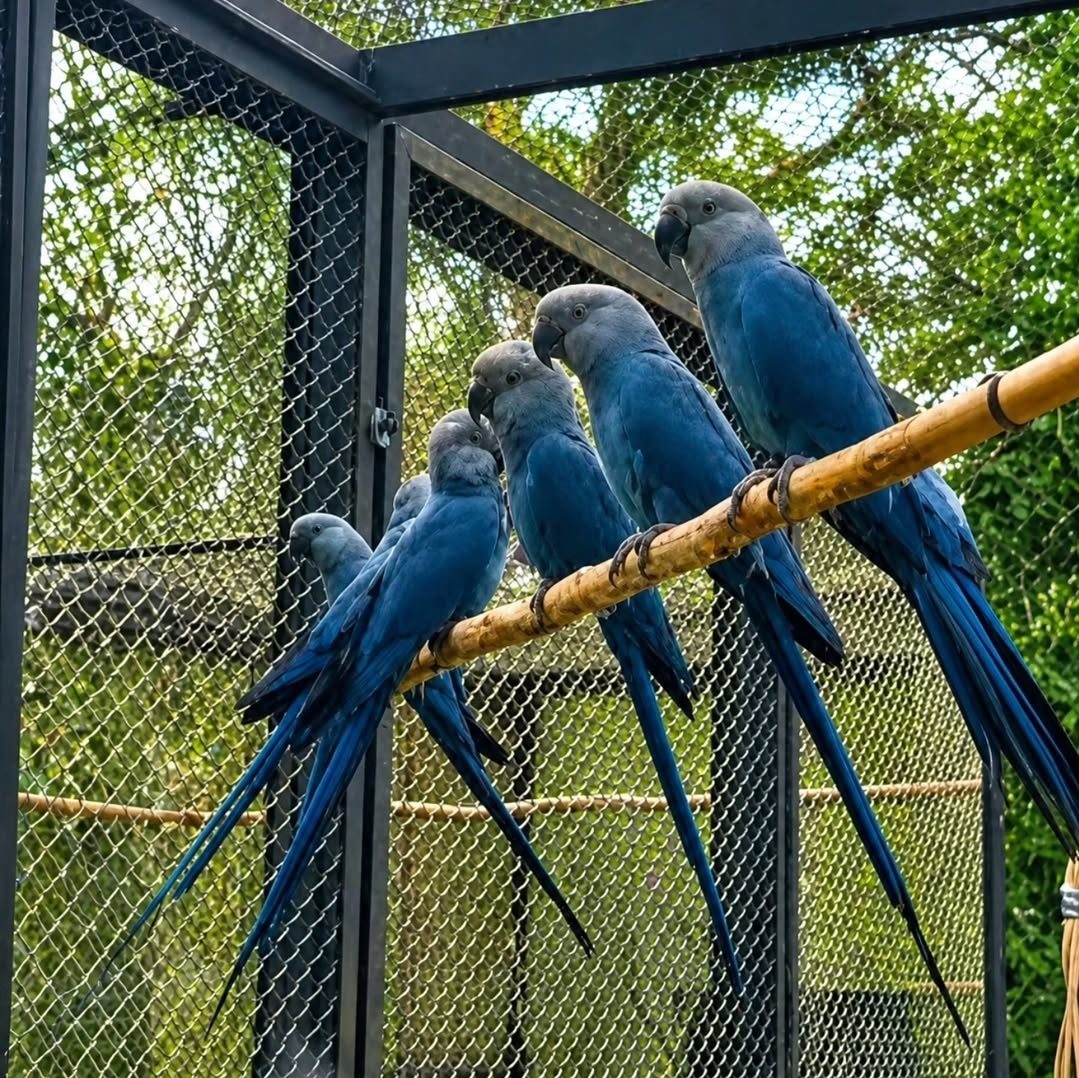
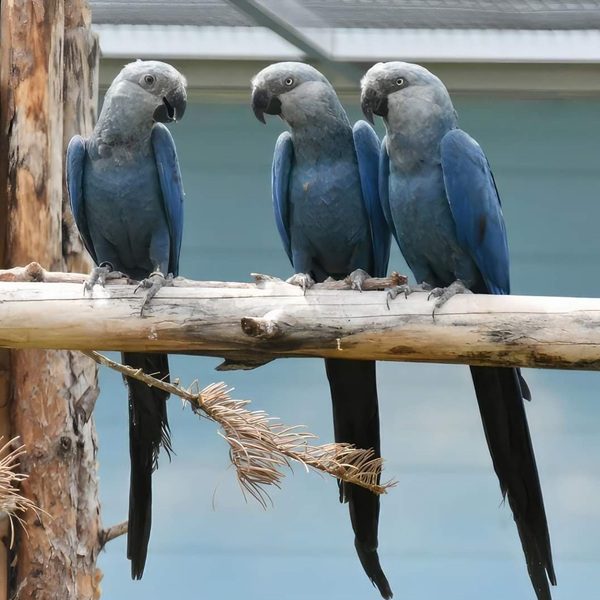
The Spix’s Macaw is a relatively small macaw with predominantly blue plumage. Its coloration can range from deeper blue on portions of the body to lighter blue tones on the head and underparts.
Its distinctive appearance makes it immediately recognizable among South American parrots.
The species has a long, curved parrot bill and the characteristic body structure associated with macaws. Compared with the much larger Hyacinth Macaw, the Spix’s Macaw is considerably smaller.
Spix’s Macaw Lifespan
Reliable lifespan information for Spix’s Macaw is limited because the species has historically had a very small population and much of the available information comes from captive birds.
Published and historical records indicate that individual Spix’s Macaws can live for several decades under appropriate care. Captive longevity can vary according to genetics, nutrition, veterinary care, housing, environmental conditions, and overall welfare.
One historically documented captive individual, hatched in 1976, was reported to have successfully produced chicks at approximately 35 years of age.
Because lifespan records for such a rare species are limited, specific claims about an exact average lifespan should be treated cautiously.
Spix’s Macaw Conservation and Captive Breeding
Captive breeding has played a major role in efforts to preserve the Spix’s Macaw.
Conservation breeding programs aim to maintain genetic diversity, increase population numbers, and support long-term recovery efforts. Birds participating in recognized conservation programs may be managed under detailed breeding and genetic-planning protocols.
The eventual goal of conservation work is not simply to increase the number of birds in captivity. Long-term recovery also involves protecting suitable habitat, maintaining genetic diversity, controlling illegal trade, and supporting conservation in the species’ native range.
Are Spix’s Macaws Available for Sale?
Searches for “Spix’s Macaw for sale” can produce advertisements and private listings, but the presence of an advertisement does not establish that a bird is legally available for purchase or transfer.
Because Spix’s Macaw is an exceptionally protected species, prospective owners should verify:
- The bird’s legal origin and ownership history
- Appropriate identification and documentation
- Captive-bred status where applicable
- National wildlife regulations
- International CITES requirements where applicable
- Import and export permits when birds cross national borders
- Any required transfer or possession permits
- Veterinary and health documentation
- Whether the proposed transaction is permitted by the relevant authorities
A legitimate transaction involving a highly protected species should be supported by verifiable documentation rather than relying solely on photographs, advertisements, or seller claims.
Responsible Spix’s Macaw Ownership
Anyone considering acquiring a Spix’s Macaw should prioritize conservation, legality, and animal welfare.
A responsible buyer should never purchase a bird when its origin or legal documentation is unclear. The extremely limited population of this species means that undocumented birds and illegal trade can have serious conservation consequences.
Before entering into any transaction, prospective owners should consult the appropriate wildlife authorities and confirm the current legal requirements in both the country of origin and the destination country.
Frequently Asked Questions About Spix’s Macaw
What is the scientific name of the Spix’s Macaw?
The scientific name of the Spix’s Macaw is Cyanopsitta spixii.
Is the Spix’s Macaw also called the Little Blue Macaw?
Yes. Little Blue Macaw is a commonly used name for the Spix’s Macaw.
Where is the Spix’s Macaw from?
The Spix’s Macaw is native to Brazil, particularly the northeastern region associated with the Caatinga biome and the São Francisco River area.
How long does a Spix’s Macaw live?
Available records indicate that Spix’s Macaws can live for several decades in captivity, although reliable lifespan data are limited because of the species’ rarity.
Is the Spix’s Macaw a true macaw?
Yes. The Spix’s Macaw is a member of the macaw group within the parrot family Psittacidae.
Does the Spix’s Macaw have subspecies?
No recognized subspecies of Cyanopsitta spixii are currently recognized.
Why is the Spix’s Macaw so rare?
The species experienced a severe decline associated with habitat loss and historical capture for the wildlife trade. Conservation breeding and habitat restoration have therefore become important components of recovery efforts.
Can you legally buy a Spix’s Macaw?
The answer depends on the applicable wildlife laws, permits, documentation, and international regulations. Because this is a highly protected species, prospective buyers should verify the legality of any proposed acquisition with the relevant wildlife authorities before proceeding.
Spix’s Macaw: Key Facts at a Glance
| Feature | Information |
|---|---|
| Common name | Spix’s Macaw |
| Other name | Little Blue Macaw |
| Scientific name | Cyanopsitta spixii |
| Family | Psittacidae |
| Order | Psittaciformes |
| Genus | Cyanopsitta |
| Native country | Brazil |
| Habitat | Caatinga and associated riverine habitats |
| Subspecies | None recognized |
| Diet | Primarily seeds, fruits and plant material |
| Conservation importance | Exceptionally high |
| Lifespan | Several decades documented in captivity |
| Legal trade | Subject to strict wildlife regulations |
Final Thoughts
The Spix’s Macaw is far more than a beautiful blue parrot. It represents one of the world’s most notable parrot conservation stories. Its distinctive appearance, Brazilian heritage, rarity, and history of captive breeding have made it one of the most recognizable endangered parrots.
If you are researching Spix’s Macaw for sale, Little Blue Macaw, Spix’s Macaw lifespan, Spix’s Macaw scientific name, or Spix’s Macaw conservation, always consider both the welfare of the individual bird and the conservation status of the species.
For any potential acquisition, legal documentation, provenance, permits, and applicable wildlife regulations should be verified before a transaction takes place.