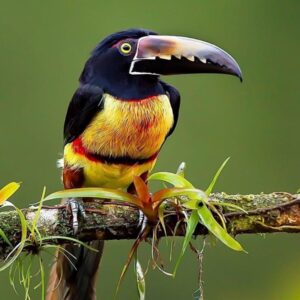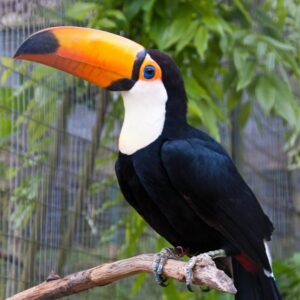
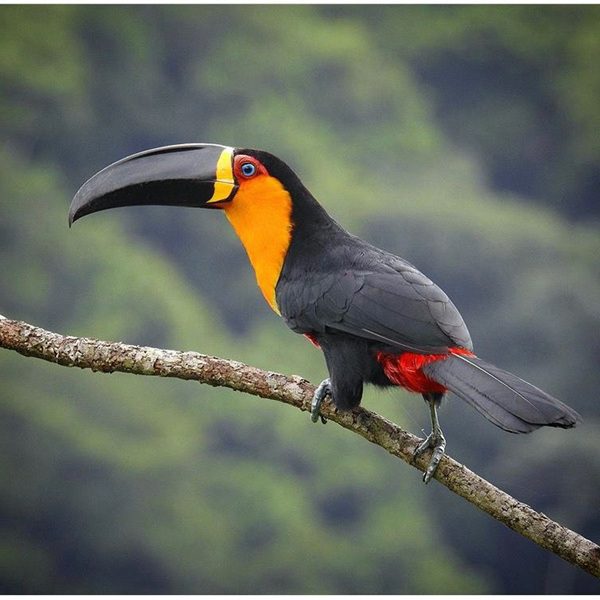
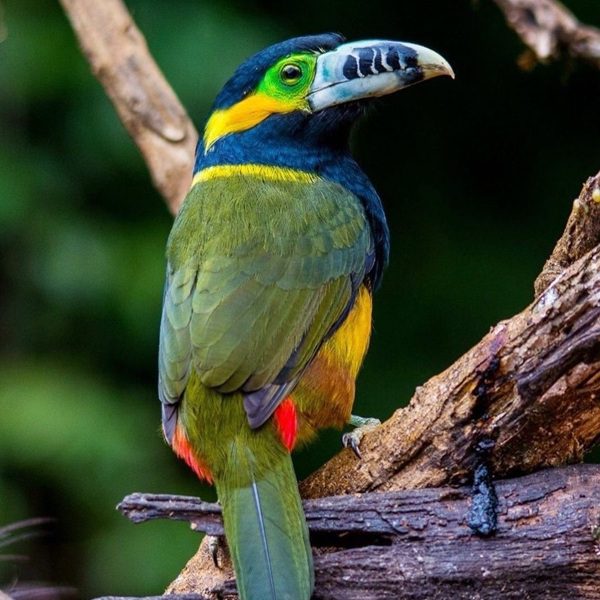
Healthy Selenidera Toucanet for Sale | 17 Months Old Fully Vaccinated
$1,800.00
Quick details:
- Age: 1 year, 5 months
- Health: Fully vaccinated and healthy
- Common name: Selenidera toucanets (dichromatic toucanets)
- Scientific name: Selenidera (Gould, 1837)
- Family: Ramphastidae
- Higher classification: Toucans
Description
Selenidera Toucanets: A Complete Guide to the Dichromatic Toucanets
What Are Selenidera Toucanets?
Selenidera is a genus of six small toucan species known as dichromatic toucanets. They belong to the toucan family Ramphastidae and get their name from a rare trait among toucans: males and females look noticeably different.
Where Do Selenidera Toucanets Live?
These birds live in lowland tropical rainforest below 1,500 metres (4,900 feet). Five of the six species are found in tropical South America. One species lives in Central America.
How to Identify a Selenidera Toucanet
All species share these features:
- Green upperparts
- Red undertail-coverts
- A patch of bare blue or blue-green skin around the eye
Male vs. Female Appearance
Most toucans look alike in both sexes. Selenidera toucanets are different, which is why they are called “dichromatic.”
Males of every species have:
- A black crown, nape, throat, and breast
- An orange or yellow streak behind the eye (the auricular streak)
Females of most species have:
- Rich brown in place of the male’s black areas
- A smaller auricular streak, or none at all
Notable exceptions:
- Guianan toucanet: The female has grey underparts and a rufous collar on the back of the neck.
- Yellow-eared toucanet: The female looks much like the male but has a brown crown and no auricular streak.
Size
Most Selenidera toucanets measure 30–35 cm (12–14 in) in total length. The yellow-eared toucanet is slightly larger at about 38 cm (15 in).
Calls
Their calls are low-pitched and croaking.
Behavior and Diet
- Social habits: They forage alone or in pairs.
- Diet: They eat mainly fruit.
- Temperament: They are quiet, elusive birds that stay in dense forest cover, so they can be hard to spot.
Nesting and Breeding
Selenidera toucanets nest in tree cavities, which they enlarge by excavating with their bills. They lay white eggs, and both parents take turns incubating them.
Quick Facts
| Feature | Details |
|---|---|
| Family | Ramphastidae (toucans) |
| Number of species | 6 |
| Habitat | Lowland rainforest, below 1,500 m |
| Range | Tropical South America; one species in Central America |
| Size | 30–38 cm (12–15 in) |
| Diet | Mainly fruit |
| Nest | Tree cavity |
| Eggs | White, incubated by both parents |
Frequently Asked Questions
Why are they called dichromatic toucanets?
Males and females have different colouring, a trait called sexual dichromatism.
How many species are in the genus Selenidera?
Six.
What do Selenidera toucanets eat?
Mainly fruit.
Are Selenidera toucanets easy to see in the wild?
No. They are quiet and stay in dense cover.