
Male Bronze-Winged Parrot (Tyson) | Characteristics & Care
$1,150.00
Say hello to Tyson! He’s a 1-year-and-3-month-old male Bronze-Winged Parrot who is in excellent health, fully vaccinated, and looking for a caring forever home.
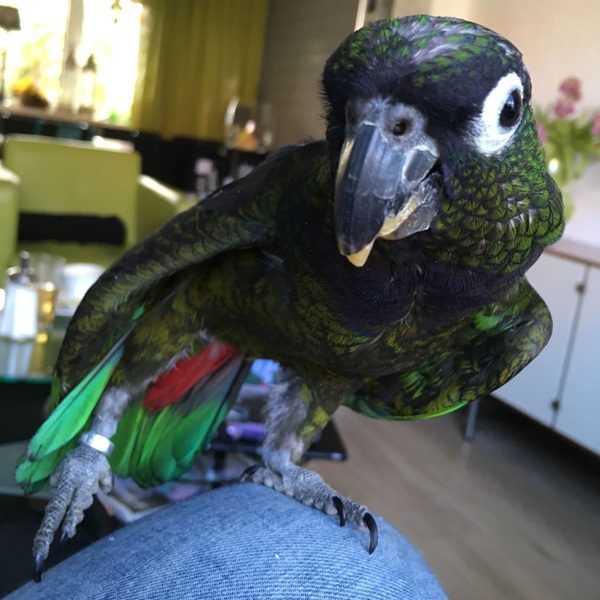
The Bronze-Winged Pionus is a sturdy, medium-sized parrot known for its charming and affectionate personality. Its plumage is a rich, deep violet-blue, accented by a white chin, pinkish-tipped feathers along the throat, and a soft bronze sheen across the wings. The coloring is wonderfully layered, with subtle shades blending throughout the body.
The head, neck, upper back, wings, and upper tail feature bronze to bronze-green feathers edged in blue and purple-blue tones, while the underparts are dark green with violet-blue tips. The lower back, rump, and tail are a deep, vivid blue, and beneath the tail sits the bright red patch that is the hallmark of every Pionus parrot. The underwings range from blue to bluish-green, and the legs are brown. Tyson’s beak is yellowish, his eyes are brown, and his eye ring is a greyish shade that can vary from bird to bird.
Description
Pionus Parrot Diet: What Do Pionus Parrots Eat?
In the wild, Pionus parrots naturally eat a varied diet that includes fruits, berries, seeds, blossoms, and other plant-based foods. They may also feed on crops such as corn when these food sources are available. This natural variety is important when planning a healthy diet for a pet Pionus parrot.
A well-balanced Pionus parrot diet should provide both nutrition and variety. A quality parrot food formulated for Pionus parrots can serve as the foundation of their daily diet, supplemented with a variety of appropriate seeds, grains, and dried fruits. Fresh foods should also be offered regularly to add nutritional variety.
Fresh Fruits and Vegetables for Pionus Parrots
Fresh fruits and vegetables can be an important part of a varied Pionus diet. Depending on what is appropriate and available, owners can offer different types of fresh produce rather than relying on just one or two foods.
Introducing a variety of fresh foods can also help prevent dietary monotony and encourage natural foraging and feeding behaviors. Any fresh food should be washed properly and offered in portions appropriate for the individual bird.
Can Pionus Parrots Become Overweight?
Pionus parrots are naturally active birds, but a bird that spends most of its time in a confined environment may become overweight if its diet and activity level are not properly managed. Providing opportunities for daily movement, exercise, climbing, playing, and foraging can help support an active lifestyle.
Because Pionus parrots can be susceptible to excessive weight gain, their overall diet should be balanced and portion sizes should be appropriate. High-fat foods, including excessive amounts of fatty seeds and treats, should not dominate the diet.
Why a Balanced Diet Matters for Pionus Bird Care
Good Pionus bird care begins with proper nutrition. A varied diet that combines an appropriately formulated parrot food with suitable fresh fruits and vegetables can help provide the nutritional variety a companion Pionus needs.
Dietary needs can vary depending on the bird’s age, activity level, health, and individual circumstances. For personalised feeding recommendations—especially if a Pionus is overweight, underweight, ill, or showing changes in appetite—consult an avian veterinarian.
In short: a healthy Pionus parrot diet should focus on balance, variety, appropriate portions, fresh foods, and plenty of opportunities for daily activity.
